My Kidney Stone Is 8 mm, 15 mm or 20 mm—Do I Need RIRS, PCNL or ESWL?
When a scan says you have an 8 mm, 15 mm or 20 mm kidney stone, the next question is usually: “Will it pass, or do I need surgery?” The answer cannot be based on size alone. A urologist also considers the stone’s location, density, number, kidney anatomy, urine blockage, infection, kidney function, previous treatments and your general health.
This guide explains how RIRS, PCNL and ESWL differ so you can have a better treatment discussion. It is educational—not a personal diagnosis. Fever with a blocked kidney, uncontrolled pain, vomiting, inability to pass urine or worsening kidney function requires urgent medical assessment.
Quick answer
- Small ureteric stones: observation or medical expulsive treatment may be reasonable when symptoms are controlled and there is no infection or threatened kidney.
- RIRS: a flexible scope and laser reach the kidney through the natural urinary passage; commonly considered for selected small-to-medium renal stones.
- ESWL: shock waves break suitable stones from outside the body, but clearance may take time and repeat sessions.
- PCNL or Supine PCNL: a small tract through the back gives direct access and is commonly favored for large, complex or staghorn stones.
First: size is important, but it is not the whole decision
An 8 mm stone sitting low in the ureter may have a different pathway from an 8 mm lower-pole kidney stone. A 15 mm hard stone may respond poorly to shock waves, while a softer, well-positioned stone may be suitable. A 20 mm branching stone with infection needs a different plan from a single round stone in a healthy kidney.
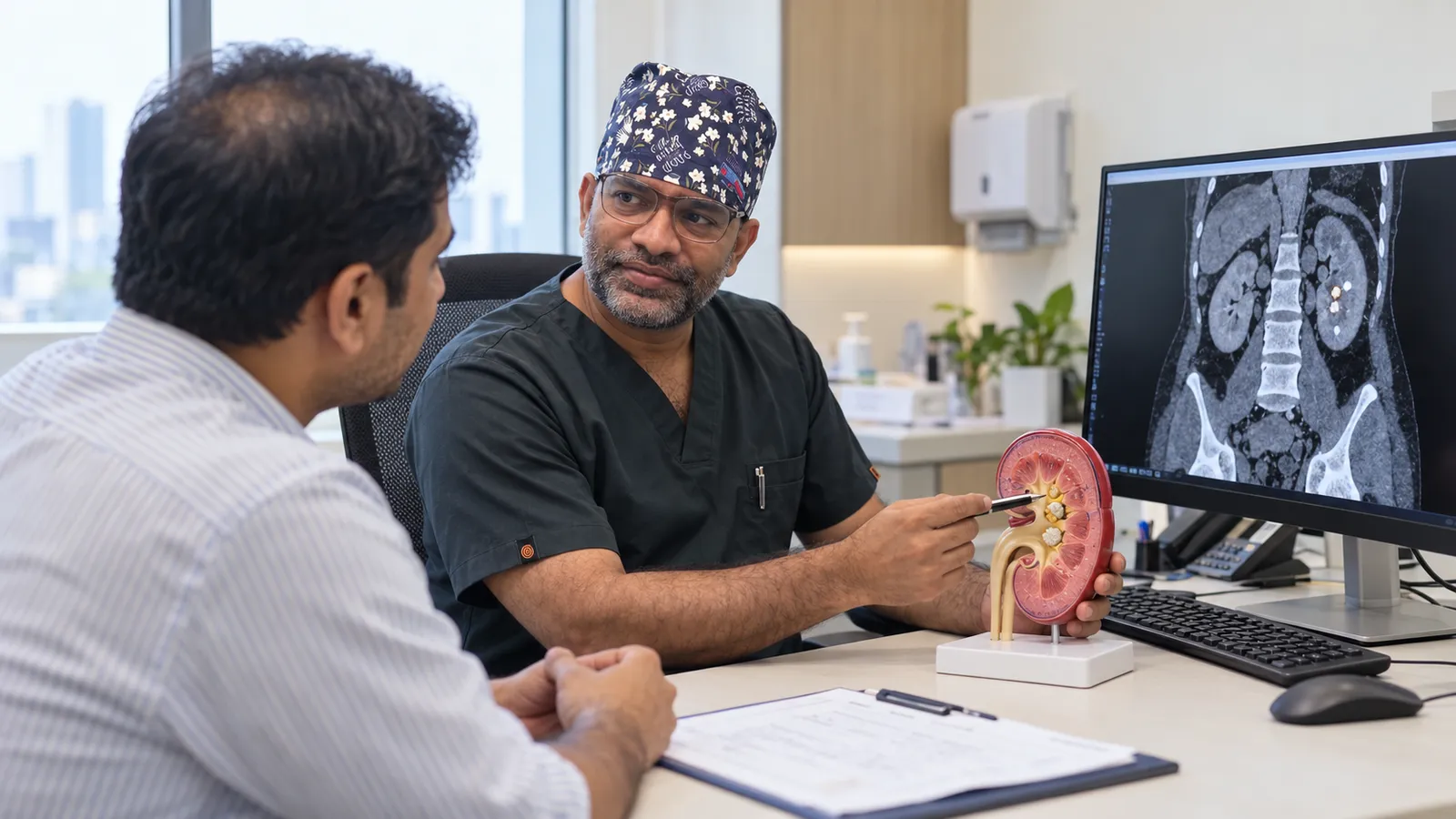
A non-contrast CT KUB usually provides the most useful map: exact size, location, density in Hounsfield units, obstruction and anatomy. Urinalysis or culture, serum creatinine, blood count and medication review—especially blood thinners—also affect safety.
What is RIRS?
Retrograde Intrarenal Surgery (RIRS) passes a fine flexible ureteroscope through the urethra and bladder, up the ureter and into the kidney. A Holmium or Thulium laser fragments or dusts the stone. There is no skin incision, but anaesthesia is required and a temporary DJ stent is common.
RIRS may be considered when
- the stone is in the kidney and is suitable for flexible endoscopy;
- ESWL is unlikely to clear a lower-pole or harder stone;
- a percutaneous tract presents extra risk;
- residual fragments remain after previous treatment.
The trade-off is that larger or multiple stones may need a longer operation or staged procedures. “No cut” does not mean “no recovery”: stent symptoms, infection and ureteric injury are possible and should be discussed.
What is PCNL—and why does Supine PCNL matter?
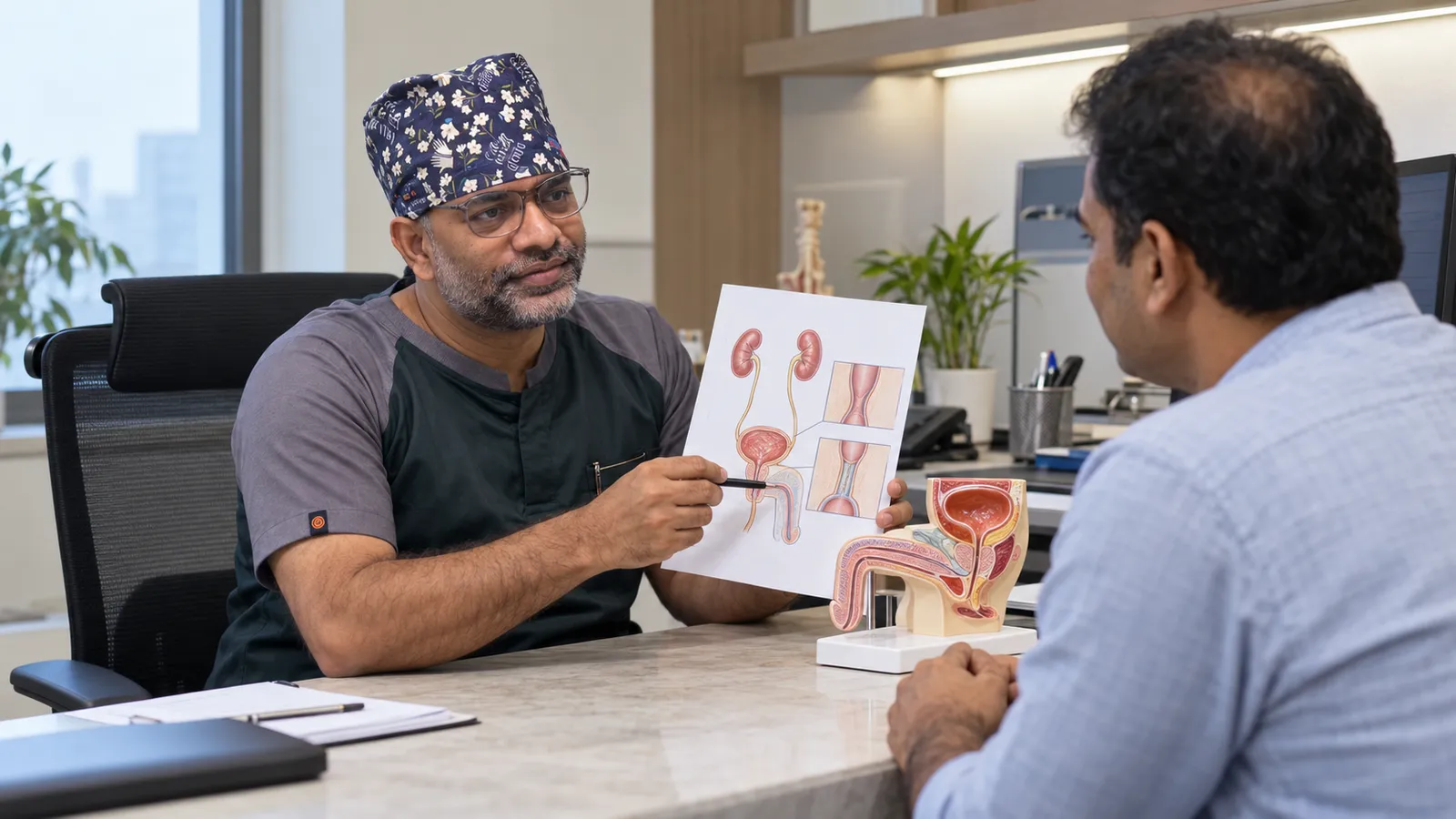
Percutaneous Nephrolithotomy (PCNL) reaches the kidney through a small tract created in the flank or back. It gives the surgeon a direct route to remove a larger volume of stone. PCNL is commonly recommended for renal stones above 20 mm and complex or staghorn stones because it can provide stronger one-session clearance.
In Supine PCNL, the patient lies on the back rather than face-down. It can offer anaesthetic and positioning advantages in selected patients and can allow combined access from above and below. The best position depends on surgeon expertise, stone anatomy and patient factors. PCNL has potential risks including bleeding, infection, injury to nearby structures and the need for drainage tubes.
What is ESWL?
Extracorporeal Shock Wave Lithotripsy (ESWL) focuses shock waves on the stone from outside the body. It avoids a scope entering the kidney, but success depends heavily on stone size, density, skin-to-stone distance and location. Fragments must still pass through the ureter, which can cause colic or blockage. Repeat sessions or another procedure may be needed.
RIRS vs PCNL vs ESWL: practical comparison
| Question | RIRS | PCNL | ESWL |
|---|---|---|---|
| Access | Natural urinary passage | Small tract through skin | Shock waves outside body |
| Often discussed for | Selected small-to-medium kidney stones | Large, complex or staghorn stones | Selected smaller, favorable stones |
| Possible limitation | More than one sitting for larger burden | Bleeding and inpatient recovery | Variable fragmentation and repeat sessions |
| Stent | Common | Sometimes | Selected cases |
What recovery questions should you ask?
- Is this expected to be a day-care procedure or an overnight stay?
- Will I have a DJ stent, nephrostomy tube or catheter, and when is removal?
- When can I return to work, exercise, driving and air travel?
- What symptoms are normal, and what should trigger an emergency call?
- Will stone analysis and a metabolic evaluation be arranged to prevent recurrence?
Kidney stone surgery cost in Mumbai
There is no responsible single price without seeing the case. The final estimate may include surgeon and anaesthetist fees, laser or disposable scope accessories, operating theatre, hospital room, medicines, imaging, DJ stent, stent removal and treatment of infection. Insurance approval may also depend on medical necessity and policy terms. Ask for an itemised written estimate.
For patients travelling to Mumbai
Before travelling, send the CT images—not only the written report—plus urine culture, creatinine, medication list, prior operation notes and details of any existing stent. Ask how many days are needed before flying, who will remove the stent, and how complications will be managed after you return home.
How Dr. Jamal Azmi plans stone treatment
Dr. Jamal Akhtar Azmi evaluates stone burden, anatomy, infection and patient risk before recommending observation, RIRS, ureteroscopy, ESWL or PCNL. His practice includes advanced endourology and Supine PCNL. The aim is not to choose the newest procedure; it is to select the safest route likely to clear the stone with the fewest reasonable interventions.
Explore kidney stone treatment in Mumbai
Medical references
- European Association of Urology: Urolithiasis Guidelines
- Multicentre comparison of RIRS and PCNL for 2–4 cm stones
Last medically reviewed: 31 October 2026. This page does not replace an examination or individualized medical advice.
Kidney Stone Treatment Decisions
Frequently Asked Questions
Can an 8 mm kidney stone pass naturally?
Some 8 mm stones pass, but the chance depends on their location, shape, symptoms and whether urine flow is blocked. A ureteric stone near the bladder behaves differently from a stone still inside the kidney. Persistent pain, infection, kidney swelling or reduced function requires prompt urological review.
Is RIRS better than PCNL for a 15 mm kidney stone?
RIRS is often considered for selected stones around 15 mm because it uses the natural urinary passage. PCNL may be preferred when stone burden, hardness, anatomy or the need for one-session clearance makes a percutaneous approach more suitable. CT findings and patient health determine the choice.
Which procedure is commonly used for kidney stones larger than 20 mm?
Guidelines commonly favor PCNL for renal stones larger than 20 mm because it offers a high chance of clearance in fewer sessions. RIRS can still be used in selected patients, sometimes as a staged procedure, when PCNL is unsuitable or the patient accepts the possibility of more than one sitting.
Will I need a DJ stent after RIRS or PCNL?
A DJ stent is frequently placed after RIRS and in selected PCNL cases to keep urine draining while swelling settles. It can cause frequency, urgency, flank discomfort or blood in the urine. Your surgeon should explain why it is needed and when it will be removed.
How much does kidney stone surgery cost in Mumbai?
Cost varies with the procedure, stone size and number, hospital and room category, equipment, anaesthesia, consumables, stent removal and length of stay. A responsible estimate requires review of the CT scan, urine culture, kidney function and medical history.
Can international patients fly after kidney stone surgery?
Many patients can travel after an uncomplicated recovery, but timing depends on infection risk, pain control, kidney drainage, stent plans and the length of the flight. International patients should obtain written clearance and a follow-up plan before departure.